
In our modern world, taking care of our mental health is important. Working from home has become more common, but it can sometimes make it harder to stay mentally healthy. That’s why we’re having a chat with an expert who can help us understand how managers can support their teams and how employees can look after themselves better while working remotely.
We’ll be speaking with Marija Davcheva a distinguished organizational psychologist with a PhD in Psychology of Human Resources from the University of Valencia.

- What specific actions can employees take daily to nurture their mental well-being while working remotely?
To begin with, employees should develop their awareness of mental health and value it daily! This means being self-aware and able to identify daily stressors, but also achievements and positive aspects of the work day. Employees can take some time at the end of the day to reflect on those aspects, check in with themselves about how the day went by, this can allow for a later follow-up on the written thoughts and see what actions, resources need to be taken to tackle these challenges. If there is a feeling of overload or miscommunication, they can write down why they think that happened and when did it happen in order to have more detailed information that they can communicate with their organization or supervisor in order to improve the situation. Additionally, it is important to have scheduled breaks that enable a true digital disconnection where employees can recharge their resources and take a well deserved rest. In the line of disconnection, it has been shown that boundaries between private and personal life can be easily blurred especially among remote workers, hence employers should try to establish clear boundaries that can physical, establish a clear working space without any distractions, time boundaries to separate clearly working hours from other responsibilities. Employees need to communicate these boundaries both to employers, but also to family members if the worker is working from home in order to obtain a distraction free working environment.
- In your view, what are the most impactful ways for employers to actively support and safeguard the mental health of their remote workforce?
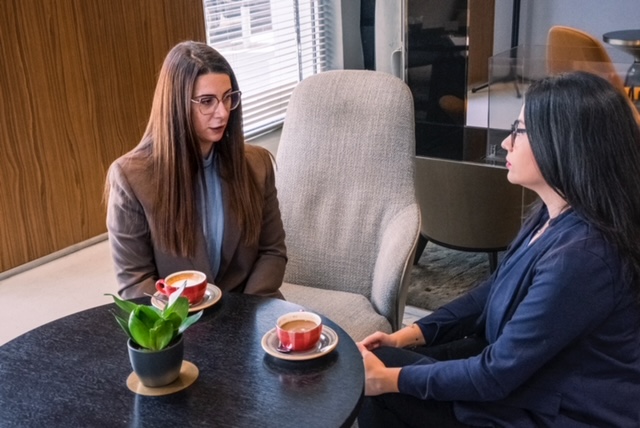
The key for me is the word that you already mentioned-support. In order to have a healthy workforce, employers need to provide support for their employees, and this can come from various levels such as the organization and the supervisor. The organization need to foster a culture that shows a sincere interest for its employees and manages organizational design to reduces stress, has a fair treatment toward employees, clear and open communication and transparency as well as human resource practices and programs that directly promote wellbeing and a healthy lifestyle. To actively show the support and value of wellbeing and mental health, the organization needs to make it a crucial theme in the company by manifesting it daily in the communication between employees, and by offering programs such as benefits for personal development which can go from having access to a psychologist or coach sessions, to team trainings to develop personal resources. Nevertheless, tackling and promoting resources is just one part of the story. To reduce stress in the remote workforce, what needs to be done in parallel is reducing job demands such as role conflict, work pressure and emotional demands.
Moreover, leaders as direct supervisors play a crucial role as they are the mirror of the organization and shape the perceptions that employees have for their organization. Supervisors can positively shape employee wellbeing by performing a positive leadership style, such the transformational leadership, that centers on inspiring and empowering employees. Research has shown that practices and leadership behaviors can have a positive impact on employees wellbeing. For instance, showing consideration, and support to employees in carrying out tasks, avoiding micromanagement but instead building relationships based on trust, as well as support of employees career development among many practices. Besides the social aspect, employers need to focus also on the task and performance management of the employees by providing a clear and organized way of monitoring task progress, provide feedback and ensure autonomy and task variety is present among employee daily tasks.
- When it comes to maintaining a healthy work-life balance, what practical steps can employees prioritize to protect their mental health?
As I mentioned previously, one important aspect is to develop self-awareness to monitor mental health, and to be able to recognize stressful challenges and know when to ask for support. Moreover, communication of their expectations, needs and preferences to their superiors and co -workers in order to manage work load, and if necessary obtain a certain flexibility in the way the work tasks can be achieved. Time management is another important aspect, prioritizing tasks taking into consideration the importance and urgency and the added value to the mission of the company can be a way to organize the work schedule. This needs to be accompanied by a supportive team culture and leader-employee relationship.
- How do you recommend employers integrate mental health breaks and physical activity into the remote workday to promote overall well-being?
I would recommend supervisors to be aware of each employees’ needs and communicate the expectations clearly and renegotiate and manage flexibility in order to promote healthy breaks. Employers should respect the time boundaries of the working hours and have a good project management planning in order to ensure not to overstep communication into non-working hours. Online meetings to check in and provide feedback of the work are crucial for an efficient management, however many times meetings can be prolonged and overstep other meetings and tasks which can disturb the working schedule. Hence, scheduling meetings far away from lunch breaks or not having them at the end of the working day may contribute to a better work planning. In multicultural teams, employers should also be sensible for workers cultural communication styles and different working time frames and holidays when planning the communication. Physical activity can be motivated and promoted by having it scheduled weekly during the work day dedicating an hour for an employee favorite sport activity. Ensuring enough breaks in between meetings by complying with the meeting time scheduled is also an important aspect to promote breaks during the day.
- Considering the challenges of remote communication, what advice would you offer employees to maintain strong social connections and support networks for their mental health?
Being aware of the challenges of non face to face communication, employees need to practice how to demonstrate emotions in virtual communication in order to avoid miscommunication. Team leaders can facilitate the creating of group communication norms and a safe space for open communication in order to avoid miscommunication issues. Also, having a transparency in the daily communication is a foundation to build strong relationships. Achieving a supportive working network may be challenging since the breaks are not face to face as in office work, however having an established system to give recognition for achievements between team members may create strong social bonds, as well as having team building activities that can facilitate a team connection via some online platforms. Moreover, grabbing some virtual coffee together is an option for remote workers to connect and talk about nonwork activities and get to know each other.
- Amidst the blurred boundaries of remote work, what strategies can employers employ to ensure their employees prioritize self-care and mental health outside of traditional office hours?
Fostering the importance of self-care among employees is a crucial mission for any organization. Organizations can implement practices such as employee benefits of discount membership in different sport and gym activities in employees’ hometowns, or even signing up voluntarily for having an online tracking of physical activities among employees that can be rewarded with points. This way, a healthy team competition can promote physical activity among employees. In addition, enabling professional and personal development resources and services (ex.psychology and coaching session) free of charge for employees can motivate them to practice self-care and grow inside and outside working hours.